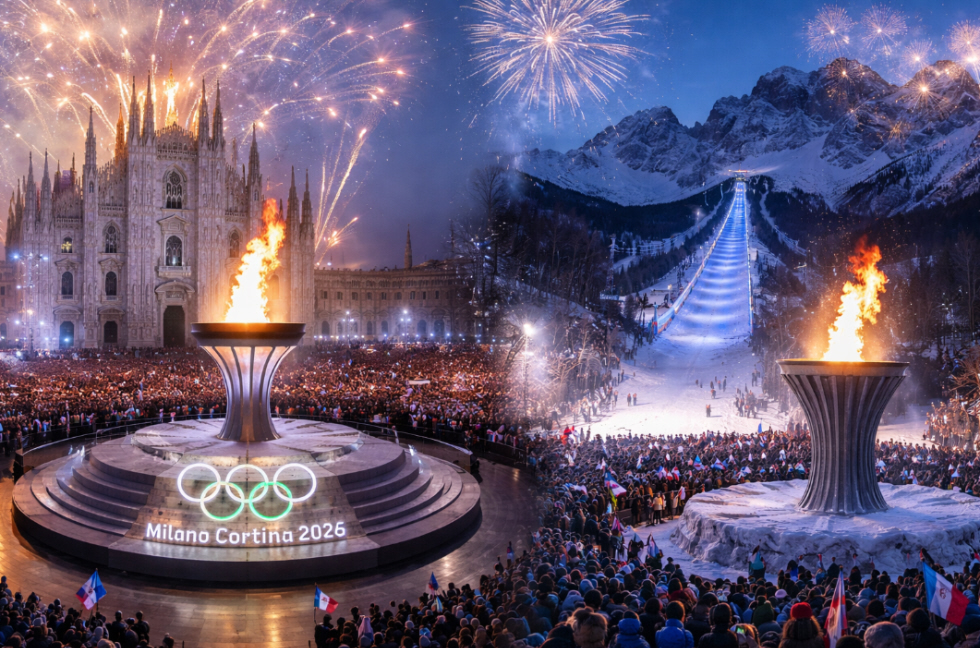
The opening of the Milano–Cortina 2026 Winter Olympic Games marked a historic moment for modern Olympism, not only because Italy returned as host nation, but also due to the way the event chose to break with traditional formats. For the first time, the ceremony was symbolically held in two cities, united by a shared sporting and cultural vision. Milan, the country’s urban and creative heart, and Cortina d’Ampezzo, a symbol of alpine sport and winter tradition, shared the spotlight in an opening designed to reflect Italy’s geographic and human diversity. Rather than competing for attention, both venues were presented as complementary elements of a single Olympic identity.
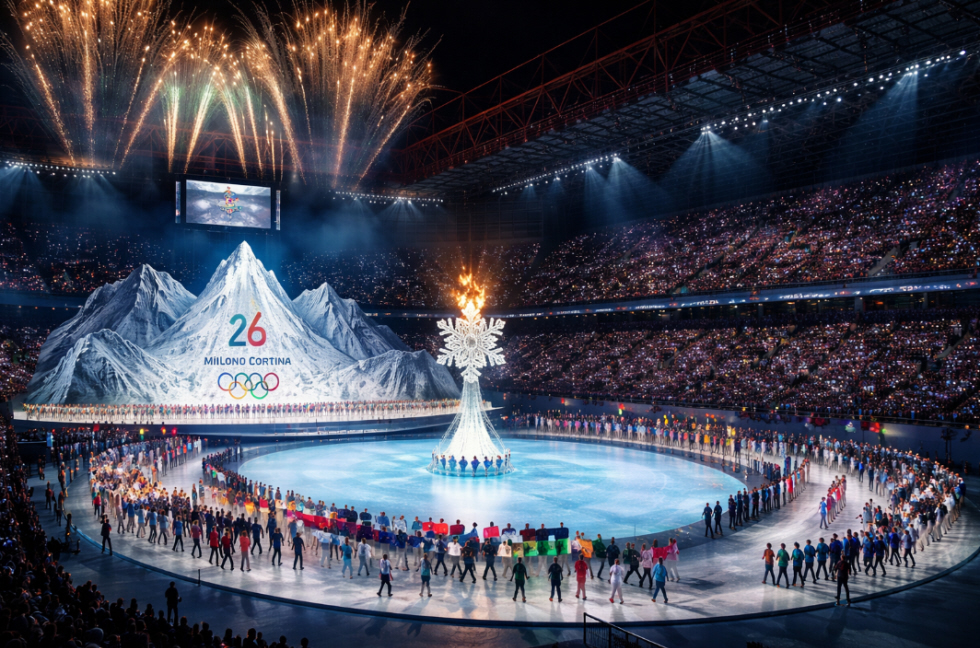
The ceremony struck a careful balance between restraint and emotion, avoiding technological excess in favor of storytelling, music, and movement. The result was an elegant spectacle, clearly referencing Italian history, its relationship with the mountains, and the role of sport as a universal language. One of the most symbolic moments came with the simultaneous lighting of the Olympic cauldrons in Milan and Cortina, a gesture representing unity, cooperation, and decentralization. The Olympic flame, duplicated yet connected, delivered a clear message: these Games do not belong to a single city, but to an entire country. Athletes paraded in an atmosphere of respect and anticipation, aware that these Games take place in a global context shaped by tension, climate challenges, and social transformation.
The parade was restrained and focused, placing attention where it truly belongs—on the athletes themselves. Italy used the occasion to highlight its commitment to more sustainable Games, adapted to the challenges of the present. The use of existing venues, the reduction of temporary infrastructure, and a strong emphasis on long-term sporting legacy were recurring themes throughout the opening message. Music played a central role, blending classical elements with contemporary compositions, reinforcing the image of a country that honors its past while looking ahead.
This was not a loud or overwhelming ceremony, but one carefully designed to evoke emotion without unnecessary spectacle. The official address avoided triumphalism and instead emphasized values such as cooperation, resilience, and peace through sport. In a fragmented world, Milano–Cortina 2026 positioned itself as a place of encounter, where competition does not exclude mutual respect. With the formal opening of the Games, Italy accepted the challenge of living up to its Olympic history and international expectations.
The inauguration made it clear that the goal was not to impress through spectacle, but through coherence between message, organization, and sporting spirit. Thus began the Milano–Cortina 2026 Winter Olympic Games: with an opening that was elegant, measured, and rich in symbolism. A beginning that sets the tone for what promises to be an edition remembered more for its meaning and balance than for excess, once again placing sport at the center of the global stage.